
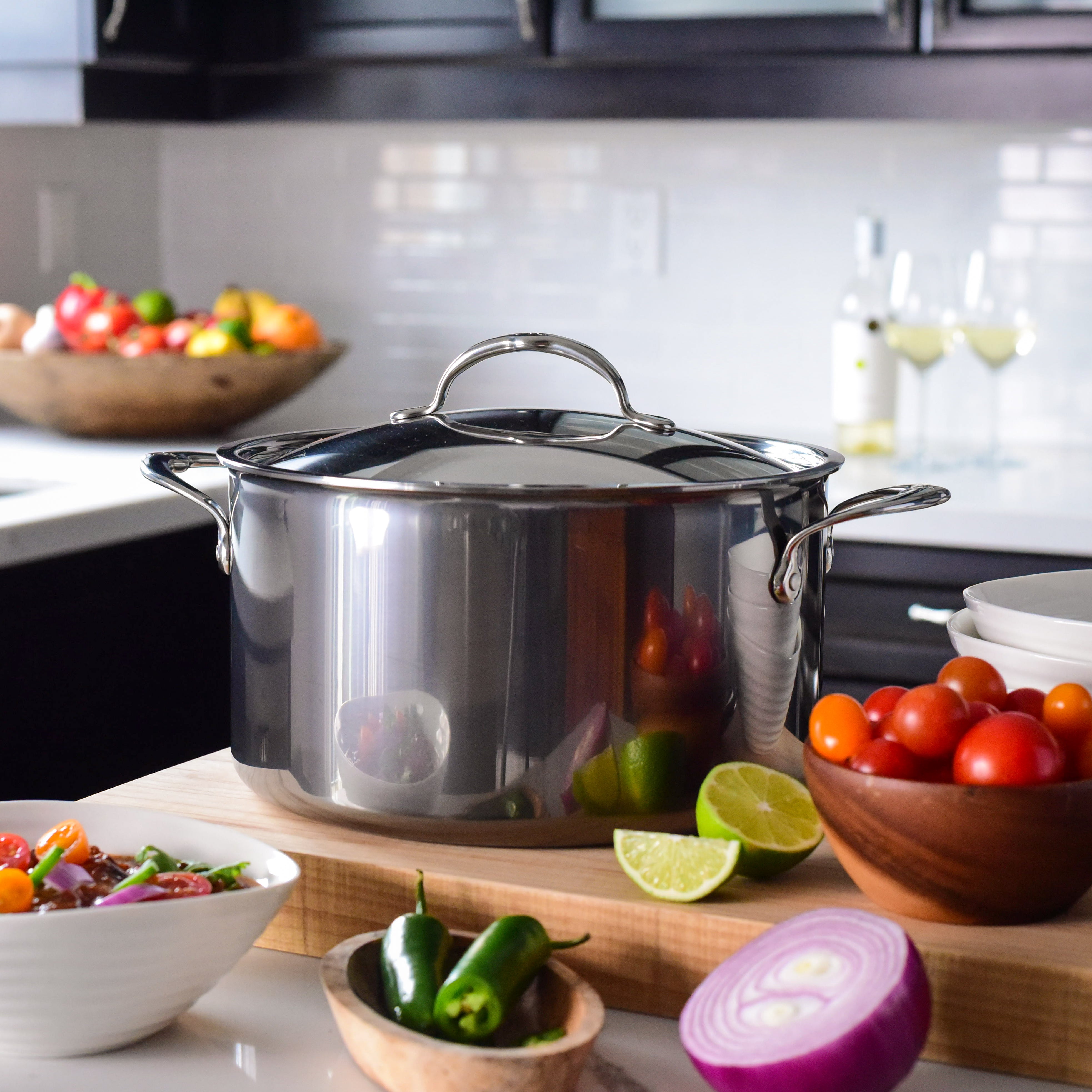
In the culinary world, the importance of a trustworthy stock pot cannot be overstated. Whether you’re simmering a hearty soup or crafting a delicate broth, the right stock pot is a kitchen essential. Selecting the perfect stock pot involves understanding the nuances of materials, sizes, and design features that cater to specific cooking needs. This guide is designed to navigate these choices and help you pick the best stock pot for your culinary endeavors.
Understanding Stock Pot Materials
The material of a stock pot greatly influences its performance and durability. Here?s a breakdown of popular materials:
- Stainless Steel: Known for its durability and resistance to rust, stainless steel is a popular choice. It?s ideal for browning and deglazing. Discover expert strategies here for using stainless steel stock pots.
- Aluminum: Lightweight and excellent at heat conduction, aluminum stock pots are great for even cooking. However, they may react with acidic ingredients.
- Copper: Offers superior heat conductivity, allowing precise temperature control. Copper pots often come with a stainless steel lining to prevent reactions with food.
- Non-stick: These pots are easy to clean and require less oil, making them suitable for low-fat cooking. However, they can be less durable over time.
Choosing the Right Size
The size of the stock pot is another crucial consideration. Here are some factors to keep in mind:
- Capacity: Stock pots range from 4-quarts to over 20-quarts. For family cooking, a 6 to 8-quart pot is typically sufficient. Larger capacities are suitable for entertaining or batch cooking. Learn about our tailored solutions for different cooking needs.
- Storage Space: Ensure the pot fits comfortably in your kitchen storage area. Consider the height and diameter relative to your storage capacity.
- Usage Frequency: If you cook large quantities often, investing in a larger pot may be worthwhile. For occasional use, a medium-sized pot may suffice.
Design Features to Consider
Beyond material and size, the design of a stock pot can enhance its functionality and user experience.
Handles and Lids
- Handles: Look for stock pots with sturdy, heat-resistant handles that provide a secure grip. Riveted handles often offer more durability.
- Lids: A snug-fitting lid is crucial for retaining heat and moisture. Glass lids are useful for monitoring cooking progress without lifting the lid.
Base Construction
- Thick Base: A thick base ensures even heat distribution and minimizes the risk of burning.
- Encapsulated Base: Some stock pots feature an encapsulated base, combining layers of different metals for enhanced heat conduction. Explore advanced guides and tips on base construction.
Care and Maintenance
The longevity of a stock pot heavily depends on proper care and maintenance. Here are some best practices:
- Cleaning: Follow manufacturer instructions for cleaning. Some materials may require specific cleaning agents or methods.
- Storage: Avoid stacking heavy items on top of your stock pot to prevent distortion or damage.
- Usage: Use appropriate utensils to avoid scratching non-stick surfaces. Find out more about this approach to extend the life of your cookware.
Choosing the right stock pot is an investment in your culinary toolkit. By considering material, size, design, and maintenance, one can make an informed decision that aligns with cooking habits and preferences. For further insights and purchasing options, explore the extensive range of stock pots available (https://hestanculinary.co/collections/stock-pots).